|
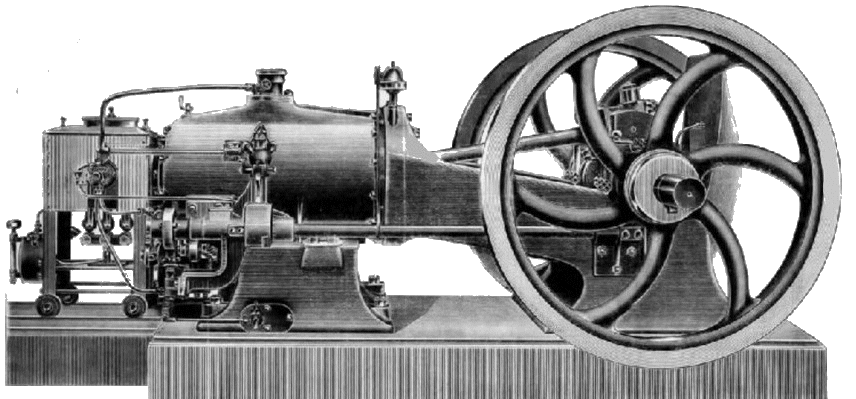
Richard Hornsby & Son, Grantham, England, Great Britain 1896 Single cylinder, Internal Combustion Engines Ackroyd (Oil Engines) 33419 115 HP 2400 mm (Length), 1500 mm (Width), 1600 mm (Height) Engine No. 33419 of 115 HP known as No.1 Where despatched from England on the 8th of April, 1911. Based on the specific details provided, Engine No. 33419 is a rare and significant piece of industrial history. While it was based on an 1896 design (the year Hornsby-Akroyd engines gained fame for powering the first oil-fueled tractor), your specific unit was manufactured and dispatched in 1911. The records for Richard Hornsby & Son engines are meticulously tracked by historians (notably through the Ray Hooley archives). Here are the details regarding its dispatch and destination: Dispatch and Destination Engine No. 33419 (115 HP, No. 1) was despatched from the Grantham works on April 8, 1911. It was shipped to Australia. Specifically, this engine was part of a major era of industrial expansion in the Southern Hemisphere, where Hornsby-Akroyd engines were preferred for their ability to run on heavy "safety" oils in remote locations like mines, waterworks, and large pastoral stations. Technical Profile: Hornsby-Akroyd No. 1 Manufacturer: Richard Hornsby & Son, Spittlegate Ironworks, Grantham, England. Type: Single-cylinder, horizontal internal combustion "Oil Engine." Design: Ackroyd (Akroyd Stuart) patent, featuring the "hot bulb" or vaporizer. Power: 115 HP (This was a very high-output unit for a single-cylinder engine of that era, typically used for municipal water pumping or heavy industrial machinery). Dimensions: Length: 2400 mm Width: 1500 mm Height: 1600 mm Historical Context By 1911, the year your engine was dispatched, Richard Hornsby & Sons was at the peak of its reputation. Interestingly, this was the same year the company sold its "Caterpillar" track patents to Benjamin Holt (the founder of what would become Caterpillar Inc.). The 115 HP rating suggests this engine was likely a Type V or a similar heavy-duty industrial variant. Because it is designated as "No. 1" in your records, it may have been the primary unit of a multi-engine installation. |